Unlocking the Secrets of Prehistoric Sea Cows: Unveiling their Fossils and Scientific Significance
Discover the fascinating world of prehistoric sea cows and their crucial role in understanding marine evolution and ecosystems
Unlocking the Secrets of Prehistoric Sea Cows: Unveiling their Fossils and Scientific Significance
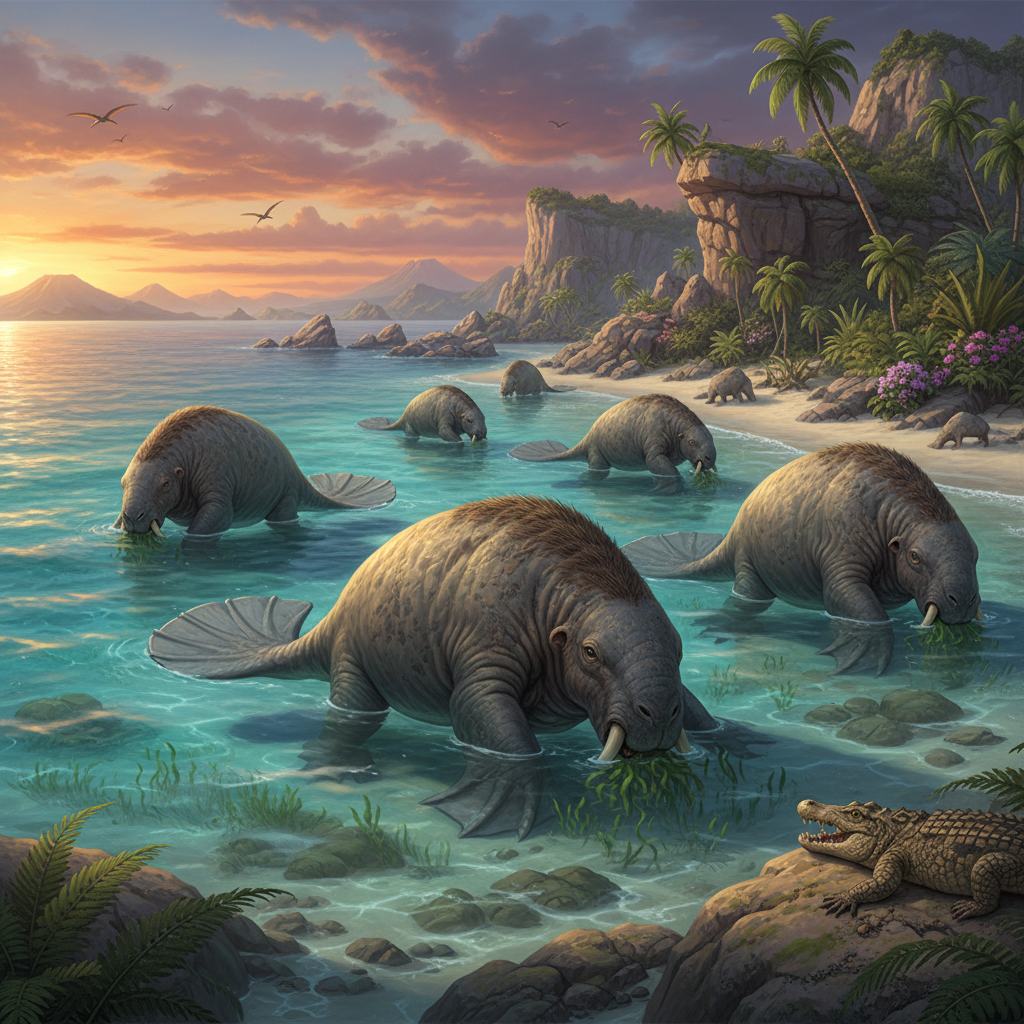
Prehistoric sea cows, also known as sirenians, are a group of aquatic mammals that once roamed the Earth's oceans during the Miocene era. Their fossils have been a subject of interest among scientists for decades, providing valuable insights into the evolution of marine ecosystems and the adaptation of species to their environments.
The discovery of prehistoric sea cow fossils has helped scientists to better understand the complex relationships between marine species and their ecosystems. By studying the fossils, researchers can gain insights into the diet, behavior, and social structures of these ancient creatures, shedding light on the evolution of modern marine ecosystems.
One of the most significant discoveries related to prehistoric sea cows is the identification of their diet. Fossil evidence suggests that these animals were herbivores, feeding on a variety of aquatic plants and algae. This discovery has important implications for our understanding of the evolution of marine food webs and the role of herbivores in shaping ecosystem dynamics.
The study of prehistoric sea cow fossils has also provided valuable insights into the adaptation of species to their environments. Fossil records show that these animals evolved unique physical characteristics, such as their streamlined bodies and powerful tails, which enabled them to thrive in their aquatic environments. By studying these adaptations, scientists can gain a deeper understanding of the complex interactions between species and their environments.
Furthermore, the discovery of prehistoric sea cow fossils has shed light on the extinction of these animals. Fossil records suggest that sirenians went extinct at the end of the Miocene era, likely due to a combination of factors, including climate change and the loss of their habitats. This discovery has important implications for our understanding of the impact of human activities on modern ecosystems and the need for conservation efforts to protect vulnerable species.
In conclusion, the study of prehistoric sea cow fossils has provided valuable insights into the evolution of marine ecosystems and the adaptation of species to their environments. By continuing to study these fascinating creatures, scientists can gain a deeper understanding of the complex relationships between species and their ecosystems, shedding light on the importance of conservation efforts in protecting our planet's biodiversity.
What's Your Reaction?