Ancient Indian Civilizations: A Historical Overview of the Indus Valley and Beyond
Explore the history of ancient Indian civilizations, including the Indus Valley, Vedic, Mauryan, and Gupta empires, with key dates, achievements, and cultural developments
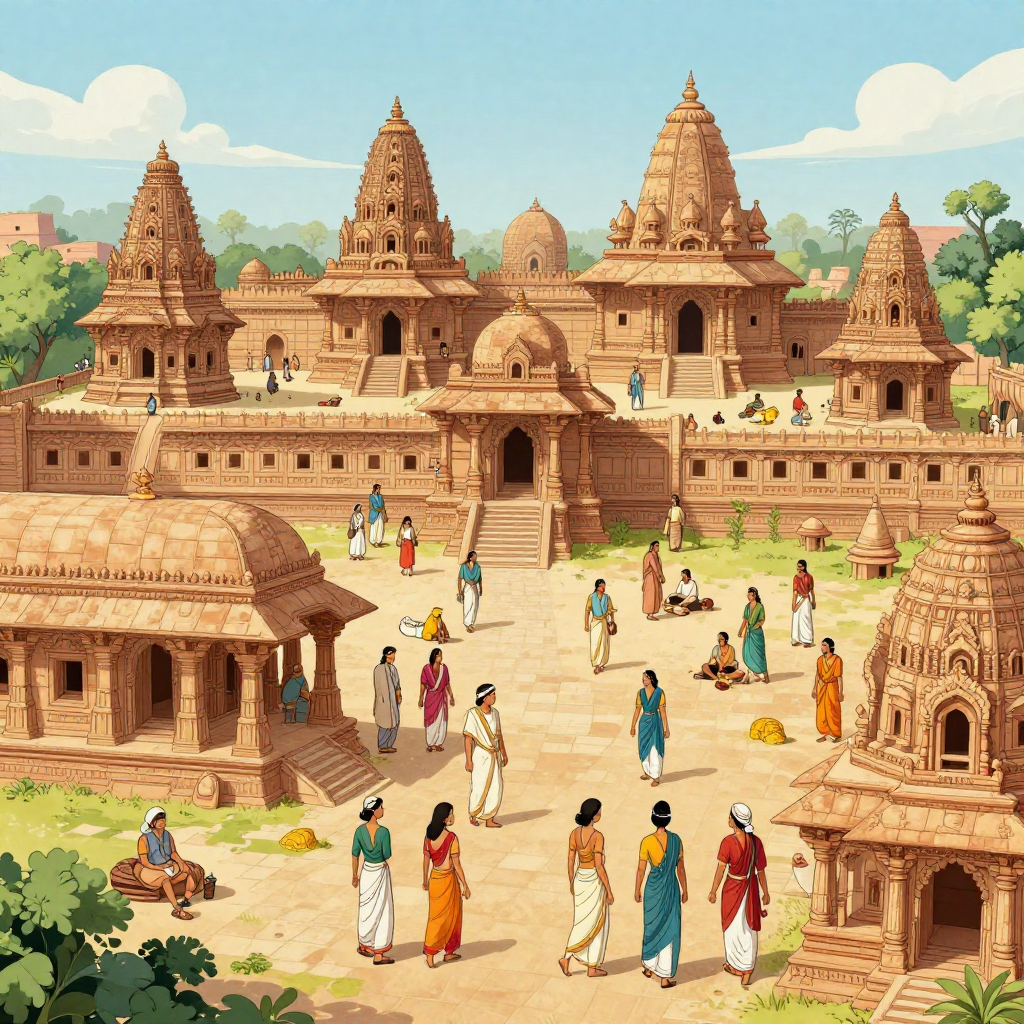
Ancient Indian Civilizations: A Historical Overview
Ancient India is a vast and complex topic, spanning thousands of years and numerous civilizations. In this article, we will focus on some of the most significant ancient Indian civilizations, including the Indus Valley Civilization, Vedic Period, Mauryan Empire, and Gupta Empire.
The Indus Valley Civilization, dating back to around 3300 BCE, is one of the oldest known urban civilizations in the world. Located in present-day Pakistan and northwestern India, it is characterized by its sophisticated urban planning, architecture, and water management systems. The civilization's decline around 1900 BCE remains a mystery, with various theories attributing it to drought, environmental degradation, or invasions.
The Vedic Period, spanning from around 1500 to 500 BCE, is marked by the composition of the Vedas, ancient Hindu scriptures. This period saw the rise of the Aryans, a nomadic people who migrated to the Indian subcontinent and brought with them their language, culture, and spiritual practices. The Vedic Period laid the foundation for Hinduism and Indian philosophy, with its emphasis on the concept of dharma, or duty.
The Mauryan Empire, established by Chandragupta Maurya in 322 BCE, marked the beginning of a new era in Indian history. With its capital in Pataliputra, the empire stretched from present-day Afghanistan to Bengal, covering a vast territory. The Mauryan Empire is notable for its administrative and economic systems, with a complex network of roads, taxation, and trade. The empire also saw the rise of Buddhism, with Emperor Ashoka converting to the faith and spreading its teachings throughout his empire.
The Gupta Empire, which flourished from around 320 to 550 CE, is often regarded as the golden age of ancient India. During this period, India experienced a cultural and economic resurgence, with significant advances in science, mathematics, and the arts. The Gupta Empire is famous for its patronage of scholars, artists, and philosophers, including the renowned astronomer Aryabhata and the mathematician Brahmagupta. The empire's decline is attributed to internal conflicts, invasions, and environmental degradation.
In conclusion, ancient Indian civilizations have left an indelible mark on the world. From the sophisticated urban planning of the Indus Valley Civilization to the philosophical and spiritual developments of the Vedic Period, the Mauryan Empire's administrative systems, and the Gupta Empire's cultural and scientific achievements, each civilization has contributed significantly to the rich tapestry of Indian history. By understanding and appreciating these ancient civilizations, we can gain valuable insights into the evolution of human societies and cultures.
What's Your Reaction?