Ancient Sea Cow Fossils: Unveiling the Mysteries of Prehistoric Marine Life
Discover the secrets of ancient sea cow fossils and explore the fascinating world of prehistoric marine life
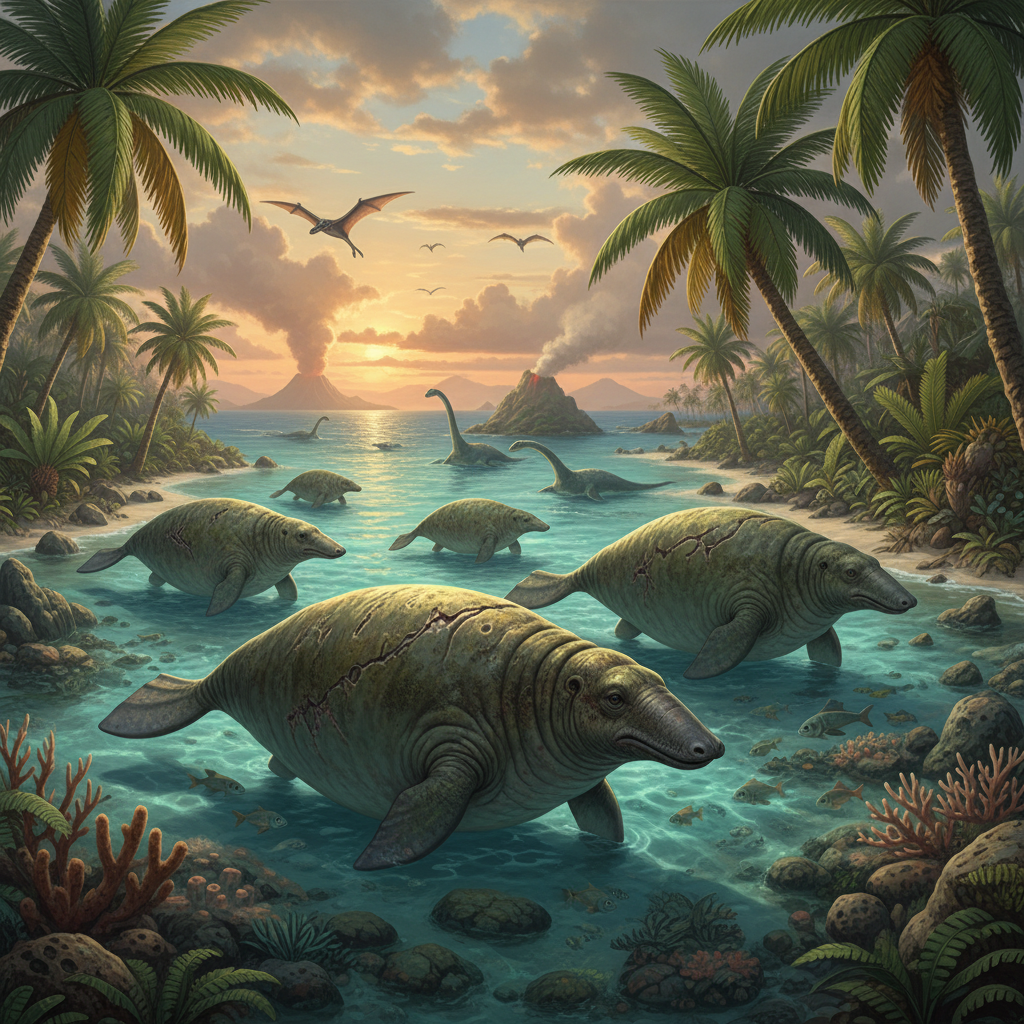
Ancient Sea Cow Fossils: Unlocking the Secrets of Prehistoric Marine Life
The discovery of ancient sea cow fossils has captivated the imagination of scientists and historians alike, offering a glimpse into the fascinating world of prehistoric marine life. These massive creatures, which belonged to the genus Desmostylus, roamed the coastal ecosystems of the ancient world, leaving behind a trail of fossils that have been carefully studied and preserved.
Found in the fossil record primarily in the Pacific Northwest region of North America, ancient sea cow fossils date back to the Miocene epoch, approximately 20-12 million years ago. These creatures were characterized by their distinctive bodies, which were shaped like a cross between a cow and a manatee, with a long neck and a pair of flippers.
Scientists believe that ancient sea cows were herbivores, feeding on a diet of seaweed and other marine plants. Their massive size, which could reach up to 8 feet in length and weigh several tons, would have allowed them to roam the coastal ecosystems with ease, playing a crucial role in shaping the marine ecosystem.
However, the ancient sea cow population declined significantly around 10,000 years ago, due to a combination of factors including climate change, sea-level rise, and the introduction of new predators. Despite their extinction, the legacy of ancient sea cows continues to fascinate scientists and historians, offering a unique window into the evolution of marine life on our planet.
Through the study of ancient sea cow fossils, scientists have gained valuable insights into the dynamics of prehistoric marine ecosystems, including the impact of climate change and the evolution of species. By examining the fossil record, researchers can reconstruct the complex relationships between ancient organisms and their environments, shedding light on the mysteries of the ancient world.
In conclusion, the discovery of ancient sea cow fossils has opened a new chapter in the study of prehistoric marine life, offering a fascinating glimpse into the evolution of our planet's ecosystems. As scientists continue to study these ancient creatures, we can gain a deeper understanding of the complex relationships between species and their environments, and the impact of climate change on marine ecosystems.
What's Your Reaction?